
The Surveillance Camera Code of Practice

The Surveillance Camera Code of Practice, created under the Protection of Freedoms Act 2012, has been a key part of the UK’s approach to video surveillance. But since it was first introduced, the legal landscape has really moved on, and so have the technologies.

So, let’s take a fresh look at some of the most common questions.

Who does this affect?

The Code officially applies to “relevant authorities” in England and Wales. This means public bodies like the police and local councils are still the ones who must “have regard” for it. However, the world of CCTV has gotten bigger than just public spaces. Data protection laws, like the UK General Data Protection Regulation (UK GDPR) and the Data Protection Act 2018, now apply to almost anyone using a camera system that records identifiable individuals. This includes private companies, businesses, and even homeowners whose cameras capture images beyond their own property. So, while the Code may not directly apply to you, the underlying principles are highly relevant and a great guide for staying on the right side of the law.

For what reason has the Code been brought in?

At its heart, the Code was created to address concerns over the potential for misusing surveillance in public spaces. It aims to create a culture of “surveillance by consent,” where the public is informed and confident that any cameras are used for a legitimate, pressing need. Think of it as a set of ethical guidelines for using this powerful technology.

Who is the Biometrics and Surveillance Camera Commissioner?

This is where things have changed a bit! The role of the Surveillance Camera Commissioner was combined with the Biometrics Commissioner in 2022 to form a new, single post. This new role oversees both surveillance cameras and the use of biometrics, like facial recognition. It makes a lot of sense, as these technologies often go hand-in-hand. The current commissioner is Francesca Whitelaw KC, who was appointed on an interim basis in 2025.

Who will enforce the Code?

The commissioner’s role is not about direct enforcement; it’s more about promoting good practice and providing guidance. The real legal muscle comes from the Information Commissioner’s Office (ICO). Since CCTV footage of people is considered personal data, any misuse is a data protection issue. The ICO has the power to investigate, issue warnings, and hand out some pretty serious fines for breaches of the UK GDPR and Data Protection Act 2018.

What punishment could a person or organisation face for breaches?

While a failure to follow the Code itself doesn’t have direct criminal consequences, a failure to follow the data protection principles it champions can certainly lead to a lot of legal trouble. The ICO can fine organizations that misuse data, and those fines can be substantial. Beyond that, the public and media can also hold organizations to account, which can do a lot of reputational damage.

Should I be aware of other video surveillance laws?

Yes, you definitely should! The legal framework for surveillance is a bit like a layer cake, with several different acts and regulations.

  • The Human Rights Act 1998 ensures public bodies respect a person’s right to a private life.
  • The UK GDPR and the Data Protection Act 2018 are the big ones. They are the legal foundations for how all personal data—including CCTV footage—must be handled.
  • The Regulation of Investigatory Powers Act 2000 (RIPA) deals specifically with covert surveillance, ensuring it is only done with proper legal authority.

What are the chances of the code being broadened to include private companies?

The government’s position hasn’t officially changed on this. But in a way, it’s already happened. Because of the UK GDPR and the Data Protection Act 2018, private companies are legally obligated to follow data protection principles that are very much aligned with the Code’s own best practices. In essence, the spirit of the Code is already alive and well in the private sector through data protection law.

How do I contact the commissioner?

For questions related to the Code, you can reach out to the Office of the Biometrics and Surveillance Camera Commissioner. Their email is: [email protected].

Got more questions? We’re here to help you get the answers you need!
Over the years, I’ve had the pleasure of visiting many sites to assess the condition of their security systems. While intruder alarms and access control often leave much to be desired, the state of CCTV systems is truly shocking.

Recent years, marked by recessions, lockdowns, and budget cuts, have led to a marked deterioration in maintenance and a lack of crucial upgrades. It’s always so surprising to see businesses invest in CCTV and then just let the systems fall to rack and ruin.

Part of the issue, to be fair, was a lack of compelling upgrade options. Who wants to swap an old analogue system for another one? It feels pretty pointless. And in the past, IP systems were often too expensive with performance that wasn’t convincing enough for a big investment. It’s no wonder that across the UK, many CCTV systems aren’t being used to their full potential and, in many cases, are simply not fit for purpose.

So, what’s the solution now? The landscape has changed dramatically. The real game-changers today are HD CCTV alongside cloud-based solutions and AI-powered analytics.

Embracing Cloud and AI

HD CCTV is still the foundation, offering the clear, usable images that make a system worthwhile. But now, we can build on that with technology that was barely a blip on the radar a few years ago.

  • Cloud Connectivity: Instead of relying solely on on-site hardware that can be damaged or stolen, many modern systems use the cloud. This allows for secure, off-site storage of footage, making it accessible from anywhere. It’s a fantastic backup and provides a lot of flexibility. Think of it as a security safety net—you don’t have to worry about your data disappearing.
  • AI-Powered Analytics: This is where things get really smart. AI is now being integrated into these systems to provide proactive security. It can do things like facial recognition, license plate recognition, and object detection. The system can be programmed to alert you to specific events, like a person loitering in a restricted area or a package being left at the front door. This moves CCTV from being a purely reactive tool (something you review after an incident) to a proactive one that can help prevent issues.

This combination of HD clarity, cloud accessibility, and AI intelligence offers a powerful and comprehensive upgrade path. Over the next few weeks, we’ll dive deeper into how these elements work together and where they are best deployed.

Until then, just remember: if your current CCTV system isn’t cutting it, the solution isn’t just a new camera—it’s a whole new approach. Investing in a system that includes HD, cloud, and AI can help you get truly clear, useful, and intelligent security. 🧐

Remember when the big question in the CCTV world was hardware vs. software? It seems like just yesterday, we were all debating whether the traditional black box DVR was on its way out, with many experts predicting it would be extinct by the end of the last decade. Back then, software-based VMS (Video Management System) solutions were gaining traction, and the idea of a simple, plug-and-play recorder felt like a thing of the past.

Of course, VMS had its upsides. Once the software was developed, it was incredibly easy to reproduce, keeping supplier overhead low. Plus, it was highly adaptable. You weren’t held hostage by the limitations of a physical box, and you could add features or make changes on the fly. And for businesses, the ability to charge recurring license fees was a great way to fuel profits and provide remote updates—a real game-changer.

On the other hand, hardware had its own loyal following. You knew exactly what you were getting, it did what it said on the tin, and it was often rock-solid reliable. It was less susceptible to viruses and didn’t have to worry about a major tech company suddenly dropping support for a specific operating system. The choice was tough, but software seemed to have the upper hand.

Then came HD CCTV over coax, which really shook things up and brought the black box solution back into the spotlight. It was a familiar, easy choice for many. We saw a lot of people happy to stick with what they had, only making a change when a device failed or a property’s needs shifted. Given the option, many chose to stick with their existing coaxial infrastructure and go with an HD-SDI DVR rather than a full-on shift to IP.

So, what’s the modern twist?

Well, fast forward to today, and the conversation has evolved yet again. The debate isn’t just about hardware versus on-premise software—it’s about the cloud. Cloud-based CCTV and SaaS (Software as a Service) have truly taken center stage.

Think of it this way: instead of buying a physical recorder or even a server for your VMS, your video footage can be stored and managed securely in the cloud. This means you can access your cameras from anywhere, on any device. And with a SaaS model, you’re not buying the software outright; you’re subscribing to a service. This lets you scale up or down easily without a huge upfront investment.

This shift has created a whole new ball game. For businesses, it’s a more flexible and often more affordable way to handle security. They get the benefits of continuous updates, robust cybersecurity, and the peace of mind that comes from knowing their data is safely stored off-site. So while hardware still has its place, the real “ascendancy” now belongs to cloud solutions that offer convenience, scalability, and a new kind of freedom.

Interesting times, indeed! The next few years will certainly continue to redefine what security looks like.

The 2025 Cloud CCTV & VSaaS Provider Landscape

An analysis of key players in the Video Surveillance as a Service market.

Market at a Glance

The Video Surveillance as a Service (VSaaS) market is a dynamic and rapidly growing industry. This infographic provides a snapshot of the key providers, their business models, and market positioning. We’ve analyzed 30+ companies to distill the core trends shaping the future of security.

30
Companies Analysed
13
Average Years Since Founding
67%
Provide Both Hardware & Software

Business Model Breakdown

Understanding how companies deliver their solutions is key. While pure SaaS is the hallmark of the cloud, many established players offer hybrid or on-premise options to cater to diverse security needs. This chart shows the prevalence of different deployment models among the analyzed providers.

Market Maturity: Founding Year Distribution

The timeline of company foundings reveals key eras in the evolution of security technology. Early players often have roots in traditional CCTV, while a surge of companies in the 2010s marks the rise of cloud-native VSaaS solutions. This bar chart visualizes the distribution of founding years across the industry.

Global Headquarters Distribution

While the VSaaS market is global, its innovation hubs are concentrated. North America, particularly the USA, dominates as the headquarters location for the majority of leading providers, highlighting its central role in the development of cloud security technology. Europe follows as another significant region for VSaaS innovation.

Key Provider Directory

Dive deeper into the specifics. This table provides a detailed look at each company, covering their founding year, headquarters, business model, and pricing information where publicly available. Note that pricing is often quote-based and can vary significantly.

Company Founded Head Office Model (HW/SW) Deployment Est. Price / Cam / Month

Data compiled as of September 2025. Valuations and pricing are subject to change.

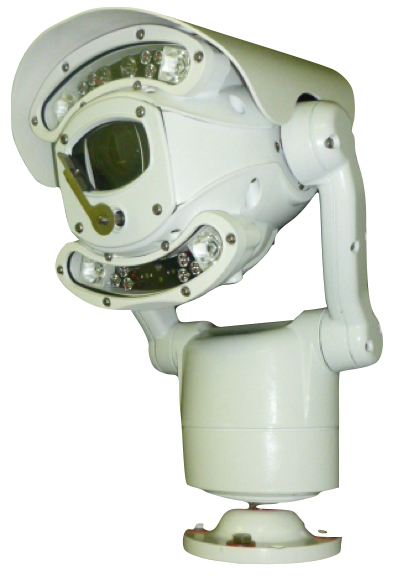
As readers of this blog will know we have followed the journey of the Predator cameras from new kid on the block to seasoned professional. Our first post all the way back in 2010, we talked about its new patented technology and our most recent where we caught up with Mark Rees from 360 for an interview.

Below are just a few of our articles.

Inside Story Read More

Jack of all trade, Master of all Read More

Success of the Predator Read More

360 Launch Enhanced Patented White Light Predator Read More

Predator gets thermal Read More

Mickey versus Predator Read More