Remember when the big question in the CCTV world was hardware vs. software? It seems like just yesterday, we were all debating whether the traditional black box DVR was on its way out, with many experts predicting it would be extinct by the end of the last decade. Back then, software-based VMS (Video Management System) solutions were gaining traction, and the idea of a simple, plug-and-play recorder felt like a thing of the past.

Of course, VMS had its upsides. Once the software was developed, it was incredibly easy to reproduce, keeping supplier overhead low. Plus, it was highly adaptable. You weren’t held hostage by the limitations of a physical box, and you could add features or make changes on the fly. And for businesses, the ability to charge recurring license fees was a great way to fuel profits and provide remote updates—a real game-changer.

On the other hand, hardware had its own loyal following. You knew exactly what you were getting, it did what it said on the tin, and it was often rock-solid reliable. It was less susceptible to viruses and didn’t have to worry about a major tech company suddenly dropping support for a specific operating system. The choice was tough, but software seemed to have the upper hand.

Then came HD CCTV over coax, which really shook things up and brought the black box solution back into the spotlight. It was a familiar, easy choice for many. We saw a lot of people happy to stick with what they had, only making a change when a device failed or a property’s needs shifted. Given the option, many chose to stick with their existing coaxial infrastructure and go with an HD-SDI DVR rather than a full-on shift to IP.

So, what’s the modern twist?

Well, fast forward to today, and the conversation has evolved yet again. The debate isn’t just about hardware versus on-premise software—it’s about the cloud. Cloud-based CCTV and SaaS (Software as a Service) have truly taken center stage.

Think of it this way: instead of buying a physical recorder or even a server for your VMS, your video footage can be stored and managed securely in the cloud. This means you can access your cameras from anywhere, on any device. And with a SaaS model, you’re not buying the software outright; you’re subscribing to a service. This lets you scale up or down easily without a huge upfront investment.

This shift has created a whole new ball game. For businesses, it’s a more flexible and often more affordable way to handle security. They get the benefits of continuous updates, robust cybersecurity, and the peace of mind that comes from knowing their data is safely stored off-site. So while hardware still has its place, the real “ascendancy” now belongs to cloud solutions that offer convenience, scalability, and a new kind of freedom.

Interesting times, indeed! The next few years will certainly continue to redefine what security looks like.
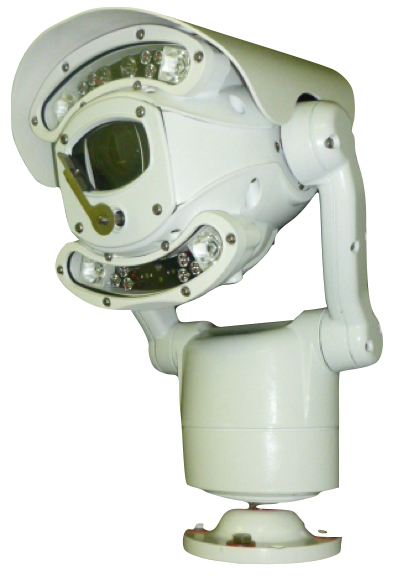
As readers of this blog will know we have followed the journey of the Predator cameras from new kid on the block to seasoned professional. Our first post all the way back in 2010, we talked about its new patented technology and our most recent where we caught up with Mark Rees from 360 for an interview.

Below are just a few of our articles.

Inside Story Read More

Jack of all trade, Master of all Read More

Success of the Predator Read More

360 Launch Enhanced Patented White Light Predator Read More

Predator gets thermal Read More

Mickey versus Predator Read More

Hikvision have a full suite of cameras, one for every application, from static domes to bullets with and without IR, PTZ cameras and even thermals the list is endless. Their cameras may well be at the cheaper end of the market but the picture quality will not disappoint.

Hikvision range of products and value is clear to be seen, even if the security of their products is still questions by some. Installed and configured correctly these security concerns can be mitigated. The options and kits available meet almost every requirement and would suit every budget.

NVR comes with the latest Firmware pre-installed, no need to install OS. They support Plug and Play, motion detection, ealerts, easy playback and export of footage in addition to a range of advanced features. Depending on models and cameras you will also be able to leverage powerful analytics.

CCTV is about security right? This is the public perception and mainly because this how it has been sold for the last 30 years. Now though with the advent of HD CCTV things are about to get very different for installers and end users alike. ROI is important when buying any product but using CCTV for security purposes only is not going to be cost effective anymore. Often any loss of goods on site is far outweighed by the capital cost of the CCTV itself. Naturally it is always going to be hard to determine how much CCTV cameras do actually save in real terms but many companies have concluded rightly that they need to get much much more out of camera systems and these systems need to go far beyond providing a security deterrent alone.

Although CCTV is primarily about security and reducing crime, this aspect can be dwarfed by other benefits bought about by HD CCTV solutions. The ” where there is blame there is a claim” culture has led to an increase fraudulent cases being bought against companies. This has risen steadily over the past few years. Traditional analogue cameras do little or nothing to substantiate  that the claim may be false. HD though is different and especially when backed up with top of the range video management software such as Avigilon or March VMS. The reduction of false claims against a company that may have cost them hundreds of thousands of pounds is just one way HD CCTV can help. Other benefits such as improvements in productivity and enforcement of health and safety are all big pluses. HD CCTV can bring an almost forensic level of detail that cannot be supplied by analogue CCTV. This means that HD CCTV is making and will continue to make a huge difference. Evidence prevoiusly made useless by older cameras and analogue DVR’s  is now clearly visible in HD. Add to this functionality that allows the user to zoom in on events without losing clarity and we can begin to see systems that will make CCTV useful in the 21st century. Also the potential of improved productivity in the workplace, something every company strives to achieve. We can expect many to conclude now is the time to invest in their business and gain the information they need to make it work efficiently giving them the edge over competitors.


Like all new concepts and products HD has to be seen to be appreciated however once experienced it would be hard and indeed foolish for any user to go back to analogue.